
Skip to content
A laboratory analyst operating an analytical instrument with a sample tray

Research & Development

Our Research Divisions

Environment & Agriculture, Food & Nutrition, and Water & Waterbodies: building healthy soils and resilient agro-ecosystems, safe and nutritious foods, and the scientific stewardship of water resources.

Environment & Agriculture

Building Healthy Soils, Sustainable Farms and Resilient Agro-Ecosystems

The Environment & Agriculture Division focuses on the scientific understanding and sustainable management of soil, crops, agricultural resources and environmental systems.

Our work integrates soil science, environmental chemistry, microbiology, plant science, nutrient management and ecological approaches to address challenges affecting agricultural productivity and environmental quality.

Weathered hands holding a clump of dark soil

Environment & Agriculture

Key Research Areas

7 areas

Soil Health & Soil Fertility

We undertake comprehensive soil-health assessment through:

  • Physico-chemical characterisation
  • Soil fertility evaluation
  • Macro- and micronutrient analysis
  • Soil organic matter and carbon assessment
  • Soil-health indicators
  • Soil Fertility Index and Soil Quality Index development
  • Spatial soil-health mapping

NAF also integrates biological indicators such as urease, phosphatase and dehydrogenase enzyme activities to develop a more holistic understanding of soil functioning.

Soil Microbiology & Biological Assessment

Research extends beyond chemical soil analysis to understand the biological processes that regulate soil health.

Our research capabilities include:

  • Soil enzyme activity assessment
  • Microbial community studies
  • 16S rRNA sequencing
  • Metagenomic approaches
  • Biochemical activity assessment
  • Carbon and nitrogen dynamics

These approaches strengthen the scientific basis for soil-health management and environmental remediation.

Soil Contamination & Remediation

NAF undertakes research on contaminated soils, with particular emphasis on heavy-metal contamination, chromium contamination and metal immobilisation.

NAF’s chromium research has evaluated Chrysanthemum and Cumbu Napier hybrid grass, together with bioamendments, as components of environmentally sustainable approaches for contaminated soils.

Biochar & Circular Bioresource Management

NAF investigates agricultural-waste-derived biochar and organic amendments as tools for:

  • Heavy-metal immobilisation
  • Soil-quality improvement
  • Nutrient management
  • Resource recycling
  • Sustainable soil management

Research also covers vermicompost, composting, organic amendments and nutrient-use efficiency.

Sustainable & Climate-Smart Agriculture

Research focuses on improving resource-use efficiency and agricultural resilience through:

  • Soil-test-based nutrient management
  • Soil amendments
  • Salinity management
  • Organic inputs
  • Biofertilizers
  • Resource-efficient agricultural practices
  • Climate-resilient farm management

The objective is to improve productivity while promoting efficient use of soil, water, nutrients and biological resources.

Plant Nutrition & Nutrient Uptake

Plant tissue and leaf analysis are used to understand nutrient uptake and support crop-specific nutrient-management decisions.

Emerging Environmental Research

NAF also undertakes research on emerging environmental concerns, including microplastics and their effects on agricultural soils and plant growth.

Food & Nutrition

From Agricultural Biodiversity to Safe, Nutritious and Value-Added Foods

The Food & Nutrition Division focuses on scientific evaluation of food quality, nutritional composition, bioactive compounds, food safety and value-added food products.

The division connects food science, analytical chemistry, microbiology and nutrition research to support healthier food systems and value addition of locally available agricultural resources.

A smiling woman holding a large bowl of groundnuts in a processing shed

Food & Nutrition

Key Research Areas

5 areas

Nutritional Profiling

NAF undertakes comprehensive nutritional characterisation of food and agricultural resources, including assessment of:

  • Proximate composition
  • Protein
  • Dietary fibre
  • Minerals
  • Vitamins
  • Amylose
  • Polyphenols
  • Flavonoids
  • Antioxidant activity
  • Other bioactive compounds

A major research initiative has profiled traditional rice varieties of Tamil Nadu, documenting variations in nutritional and bioactive characteristics. The research has included farmer-sourced traditional rice landraces from multiple districts of Tamil Nadu.

Traditional Foods & Nutritional Biodiversity

NAF supports scientific documentation of traditional crops and food resources to generate evidence on their nutritional and bioactive potential.

This work contributes to:

  • Nutritional security
  • Agricultural biodiversity conservation
  • Evidence-based promotion of traditional crops
  • Scientific value addition
  • Development of nutrition-oriented food products
Functional & Value-Added Foods

NAF undertakes formulation and quality evaluation of innovative food products using locally available resources.

Research includes development of wood apple-based nutraceutical gummies, involving formulation optimisation, physicochemical analysis, proximate composition, bioactive components, microbial safety, shelf-life and sensory evaluation.

Food Quality & Safety

The laboratory provides analytical support for:

  • Chemical quality assessment
  • Nutritional analysis
  • Microbiological testing
  • Adulteration assessment
  • Food-additive analysis
  • Food-safety evaluation

These capabilities support food industries, researchers and institutions in maintaining quality and safety standards.

Research & Analytical Support

NAF provides analytical facilities and technical support to students and researchers from:

  • Food Science & Technology
  • Agriculture
  • Biotechnology
  • Basic Sciences
  • Environmental Sciences

The division also supports research and technical training in advanced analytical techniques including HPLC, GC-MS, AAS, CN analysis and microbial analysis.

Water & Waterbodies

Scientific Stewardship of Water Resources and Aquatic Ecosystems

The Water & Waterbodies Division focuses on scientific assessment, planning, monitoring and sustainable management of water resources, watersheds, lakes and other waterbodies.

Our approach integrates hydrology, hydrogeology, GIS, remote sensing, water-quality assessment, field observations and ecological information to support evidence-based water-resource management.

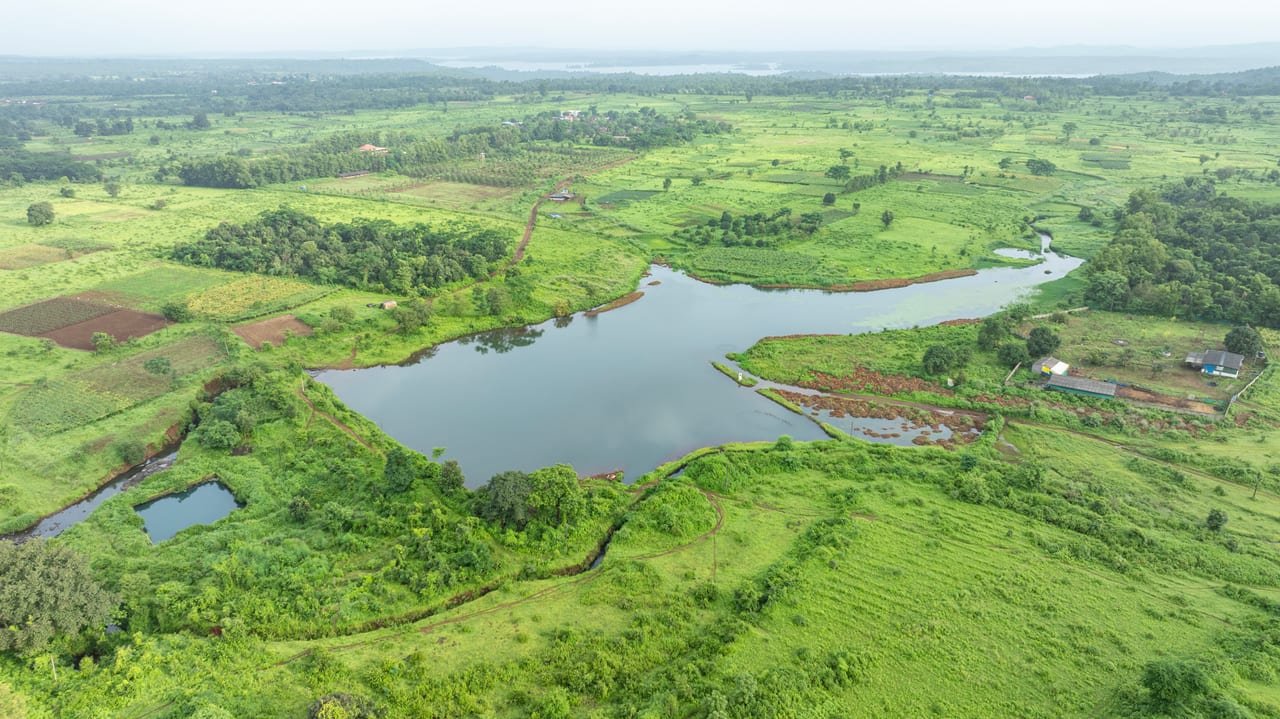
Aerial view of a winding lake among green paddy fields and scrub

Water & Waterbodies

Key Research Areas

7 areas

Water Resource Planning

NAF uses multi-factor spatial analysis to identify locations where water interventions can have the greatest potential impact.

Parameters such as:

  • Terrain
  • Slope
  • Drainage
  • Land use
  • Landscape characteristics

are considered in intervention planning and site prioritisation.

Remote Sensing & Water Monitoring

Time-series satellite data are used to monitor:

  • Water spread
  • Vegetation dynamics
  • Land-use change
  • Environmental change
  • Landscape-level trends

This provides objective spatial evidence for monitoring changes before, during and after interventions.

Hydrological Modelling

NAF develops and applies catchment-scale hydrological models to understand:

  • Water yield
  • Runoff
  • Sediment movement
  • Catchment response
  • Surface-water behaviour

Weather data preparation and appropriate gap-filling procedures are incorporated to improve the reliability of model inputs.

Groundwater Assessment

GIS and geospatial approaches are applied to assess groundwater quality and suitability for agricultural purposes, supporting spatial decision-making for water-resource management.

Water Quality Assessment

NAF combines field-based analytical testing with spatial approaches to understand water-quality conditions and their implications for agricultural and environmental management.

Emerging research directions include integrating satellite-based observations with field water-quality testing.

Lake & Waterbody Rejuvenation

NAF applies a systems-based approach to lake and waterbody restoration.

For waterbody rejuvenation programmes, NAF uses the Integrated Lake Basin Management (ILBM) framework, assessing six governance dimensions:

  • Institutions
  • Policies
  • Participation
  • Technology
  • Finance
  • Information

This approach recognises that sustainable waterbody restoration depends not only on physical restoration works but also on governance, participation, information and long-term management.

Environmental Monitoring & Impact Assessment

Water-resource programmes are supported through integrated monitoring of:

  • Water availability
  • Groundwater conditions
  • Land health
  • Vegetation
  • Land-use change
  • Soil conditions
  • Environmental indicators

The objective is to establish a scientific evidence base for assessing the effectiveness and sustainability of interventions.

Strengths

Selected Research Strengths

  1. Soil Health

    Integrated physico-chemical and biological assessment for holistic soil-health evaluation.

  2. Environmental Remediation

    Research on chromium-contaminated soils, biochar-based immobilisation and phytoremediation.

  3. Sustainable Agriculture

    Soil-test-based nutrient management, bioinputs, amendments, salinity management and resource-efficient practices.

  4. Food & Nutrition

    Scientific profiling of traditional rice and development of value-added functional food products.

  5. Water Resources

    Remote sensing, GIS, hydrological assessment, groundwater-quality evaluation and water-resource planning.

  6. Waterbody Restoration

    Application of the Integrated Lake Basin Management framework to support sustainable lake rejuvenation.

Conical flasks of orange and brown liquid samples in a shaker rack

From Contamination to Restoration

A Demonstrated Research-to-Restoration Approach

NAF’s chromium-contaminated soil research illustrates the Foundation’s approach to translating scientific research into environmental solutions.

The research combines chemical assessment, bioavailability studies, biochar and bioamendment interventions, phytoremediation and biological indicators to investigate sustainable approaches for restoring contaminated soils.